At a glance
What we built
MTX connects clinics, trip requests, dispatch, drivers and billing in a coordinated medical transport platform.
| Product | MTX |
|---|---|
| Interfaces shown | Desktop / web |
| Technology | Web platform · Driver mobile application |
| Core work | Scheduled trips and dispatch planning · Driver mobile workflow and fleet coordination · Role-based administration and billing |
Product flow
How it works
Scheduled trips and dispatch planning
Driver mobile workflow and fleet coordination
Role-based administration and billing
The interface
Inside the product
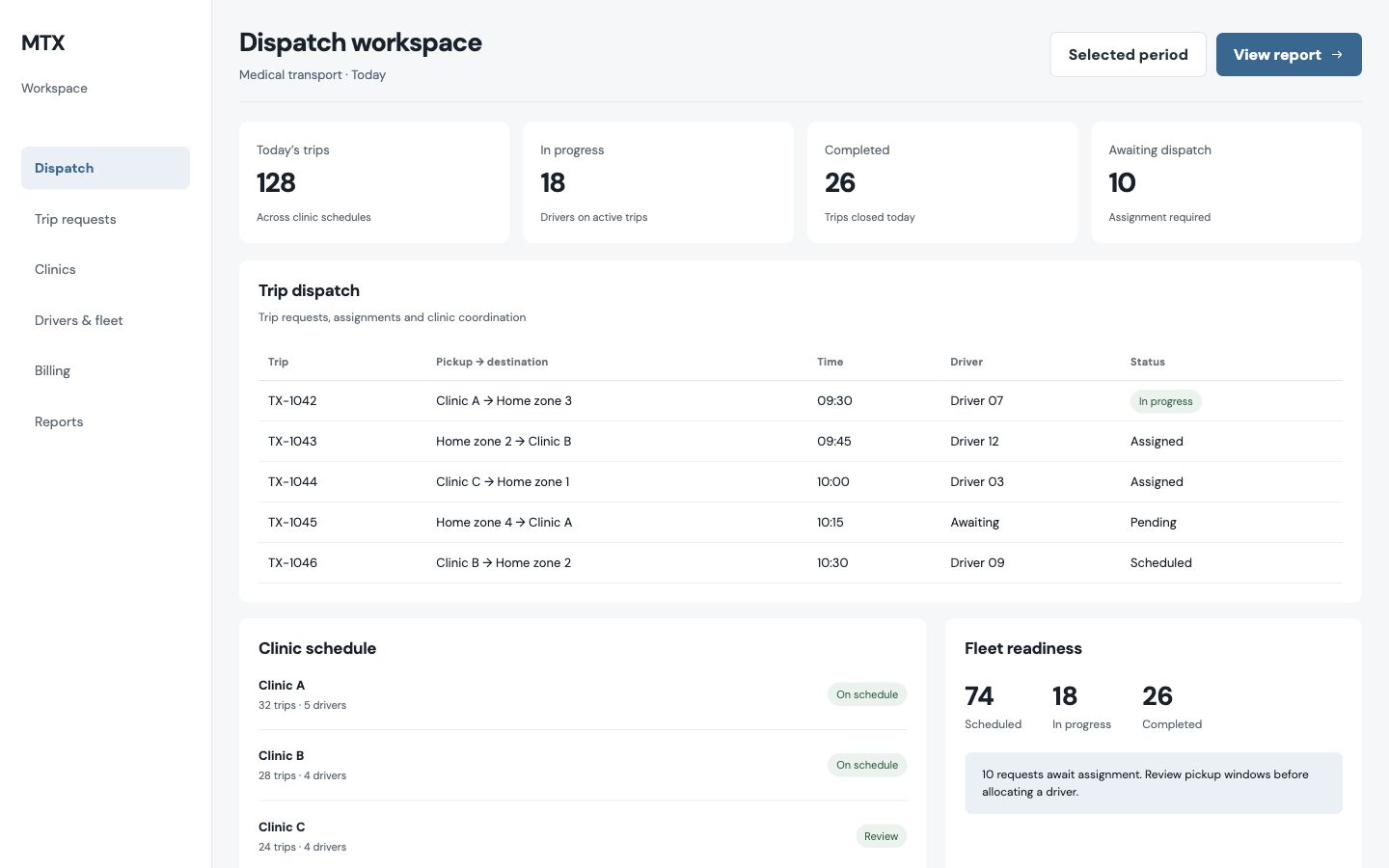
Desktop interface · 01
Scheduled trips and dispatch planning
Design notes
Decisions behind the experience
A service request
Turn a medical trip into a coordinated job
- Clinic and customer requests
- Trip and vehicle context
Read the context
The transport design begins with a clinic or customer request for a journey. The operator needs the pickup, destination, passenger needs, schedule and assigned vehicle in one record before dispatch can proceed.
Ambulatory and wheelchair trips have different service requirements. The system scope therefore treats the trip as more than a calendar entry: it is a handoff among the requesting clinic, coordinator, driver and billing team.
Dispatch and driver
Keep the next action clear for each role
- Dispatch board
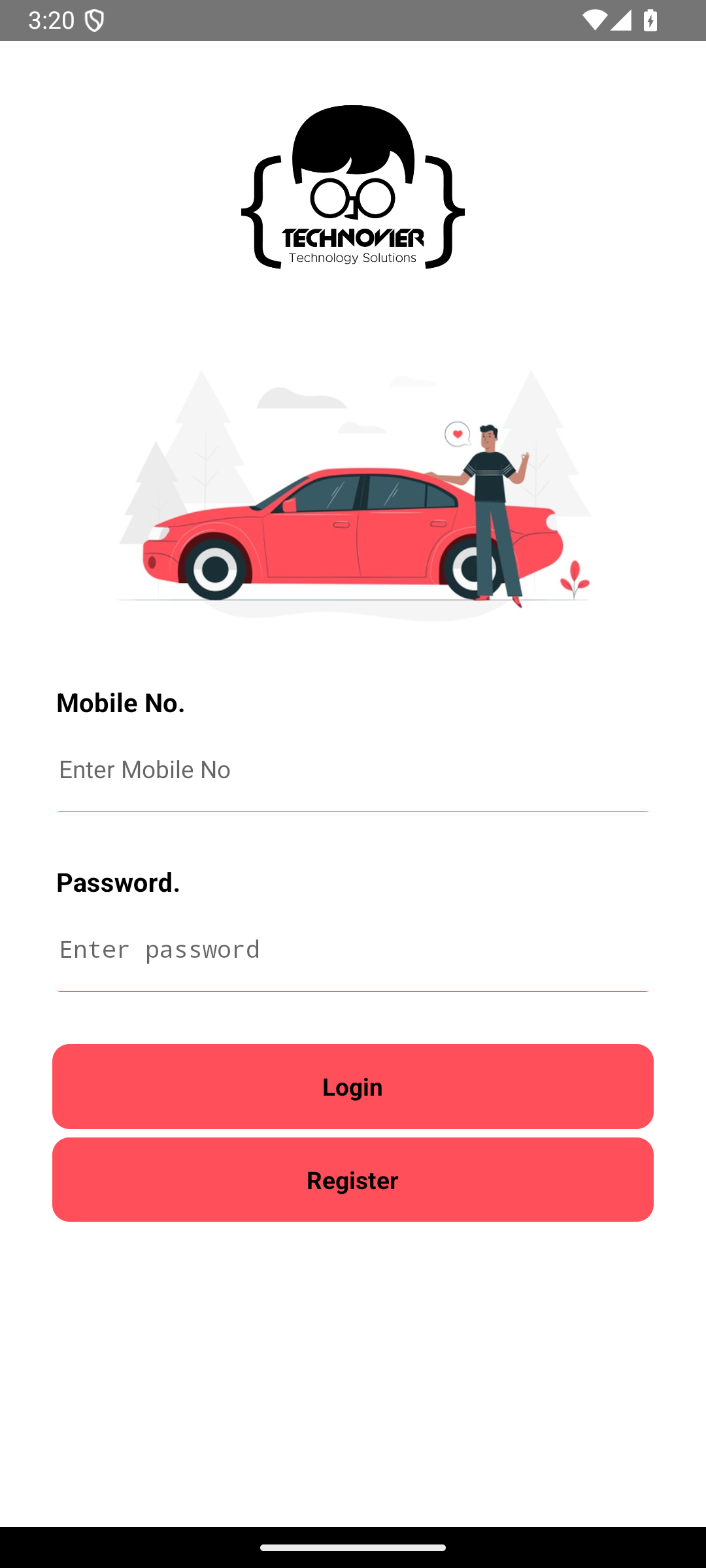
- Driver-specific trip view
Read the context
Coordinators need to see unassigned, scheduled and active trips across the fleet. Drivers need a narrower mobile view of their own pickups, routes and completion actions.
The design joins those views through the trip record. A change made by dispatch should be visible to the person on the road without sending a fresh manual itinerary.
Back-office work
Carry trip activity into claims and communication
- Clinic and staff records
- Claims and communication
Read the context
The high-level scope includes HR, user management, clinic management, trips, email and claims. These modules reflect the work that surrounds transport: managing people and clinic contacts, confirming service, and preparing the related administrative record.
Bringing those activities into one platform gives staff a way to follow a trip from request through completion and later review.
Build direction
Design the replacement around a shared trip record
- Role-based web and mobile views
- Shared trip and notification design
Read the context
The architecture design pairs a React-based interface with a Node service, MySQL, maps and notifications. Its central object is the trip: it connects booking, dispatch, driver action and reporting.
The interface work keeps role-specific screens focused while making the same trip visible at the level each team member needs.
Design and development
What powers it
Platform and technology
Web platform · Driver mobile application
Core capabilities
- Scheduled trips and dispatch planning
- Driver mobile workflow and fleet coordination
- Role-based administration and billing
Questions about the product
Questions about this product
What does this product help people do?
Coordinate a medical trip from the first request through dispatch and driver handoff.
Which screens can I explore?
Scheduled trips and dispatch planning.
What capabilities are covered?
Scheduled trips and dispatch planning, Driver mobile workflow and fleet coordination, Role-based administration and billing.
Enterprise projects