What is a Focused Build?
A Focused Build is a bounded Technovier implementation for one defined revenue-system problem, such as speed-to-lead, routing, booking, CRM pipeline setup, one funnel, one automation workflow, or attribution setup.
Technovier professional engagement
Use a Focused Build when one operational problem is clearly blocking response, booking, pipeline movement, or measurement and does not require a wider system rebuild.
Investment
$5,000-$7,000 one-time
Timeline
21-30 days
Engagement
One defined problem
Best fit
A narrow bottleneck that can realistically be fixed in under 30 days
What's inside
Each engagement defines what Technovier will implement, what is separately scoped, how long the work should take, and how the result will be handed over or operated.
Included
Separately scoped
Related capabilities
These are not automatic entitlements. They are included only when they are necessary to solve the agreed system problem.
Engagement flow
We move through three tightly managed phases: alignment, build, and launch support. You get async Loom updates, shared dashboards, and one accountable Technovier team throughout.
Map the leak, define the KPI, and lock the one result this sprint has to produce.
Rebuild the page, workflow, pipeline, or follow-up sequence and pressure-test the handoffs.
Go live with measurement, team enablement, and a recommendation to operate internally, expand, or agree ongoing work.
Overview
Focused Build is for businesses that do not need a large rebuild. They need one clearly bounded problem fixed so demand can move through the next handoff with less friction. We isolate the constraint, agree the implementation boundary, and repair the page, pipeline, workflow, booking path, or measurement layer directly responsible. The point is to create a working improvement inside a realistic 21-30 day window without implying a complete GTM or CRM transformation. Every build ends with a clear handoff, a measurable target, and a decision point: operate it internally, expand into a connected system build, or agree an ongoing scope.
Fit Check
System Scope
Delivery Flow
Step 1
We identify the one leak that is creating the most lost revenue and define the KPI that has to improve.
Step 2
We implement the page, workflow, or routing change that directly addresses the leak.
Step 3
We test the form, trigger, booking event, and owner notification so the fix works in practice.
Step 4
We document what changed, what to watch, and whether the business should operate it internally, expand, or agree ongoing work.
Quick Answers
A Focused Build is a bounded Technovier implementation for one defined revenue-system problem, such as speed-to-lead, routing, booking, CRM pipeline setup, one funnel, one automation workflow, or attribution setup.
A Focused Build is best for teams that can identify one high-value constraint and want practical implementation without committing to a broader multi-system rebuild.
It can address one defined problem such as missed follow-up, unclear routing, a weak booking path, a single funnel, one automation workflow, CRM pipeline setup, or tracking and attribution gaps.
Technovier implements only the components required for the agreed problem. That may be a page, pipeline, routing rule, follow-up workflow, booking path, automation, integration, or tracking layer, but not all of them by default.
The build is measured against the constraint selected during scoping, such as response time, booking completion, routing accuracy, workflow completion, or tracking coverage.
The team should provide access to the tools involved, the current process, an accountable owner, and a clear business constraint so the implementation can stay bounded.
Deliverables
Outcomes
The team stops losing inbound inquiries in the gap between capture and first follow-up.
The repaired booking path turns more interested leads into actual appointments.
Reminders and recovery flows reduce the number of leads that go stale.
The operator spends less time doing repetitive follow-up work by hand.
At the end of the build, the business knows whether to stabilize, expand, or move into ongoing operations.
Proof
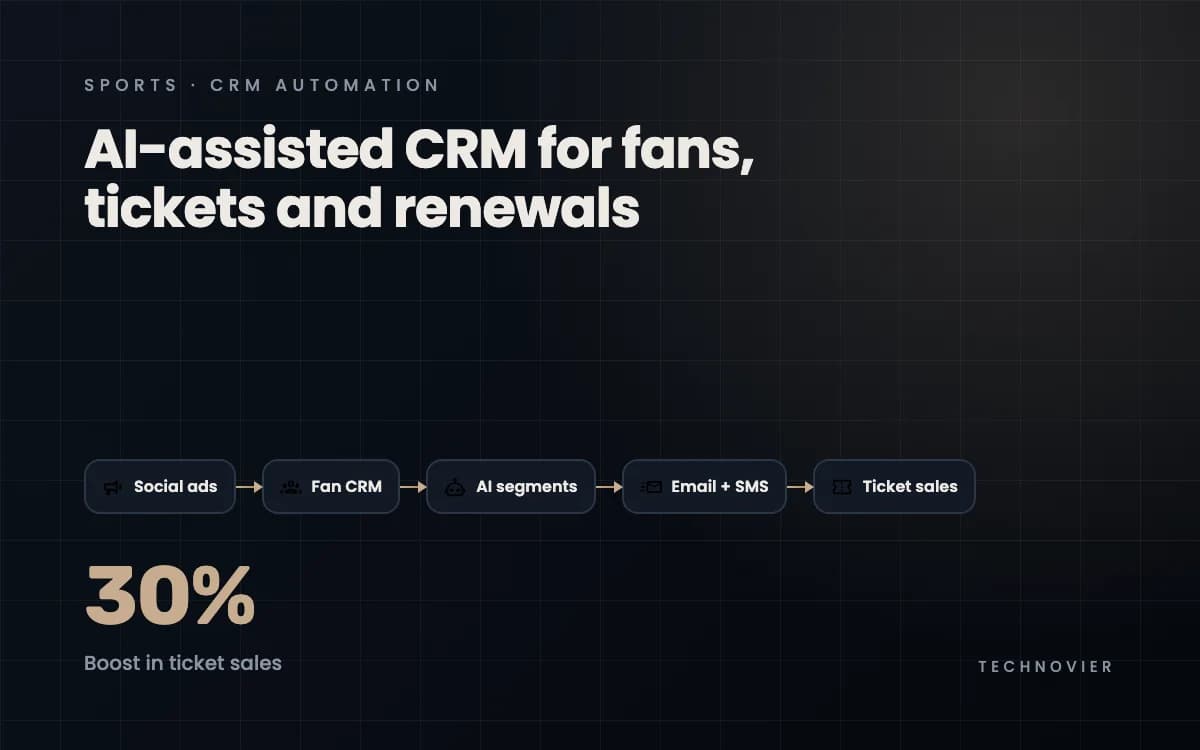 CRM & Automation
50%
Increase in Fan Engagement
30%
Boost in Ticket Sales
45%
Increase in Email Open Rate
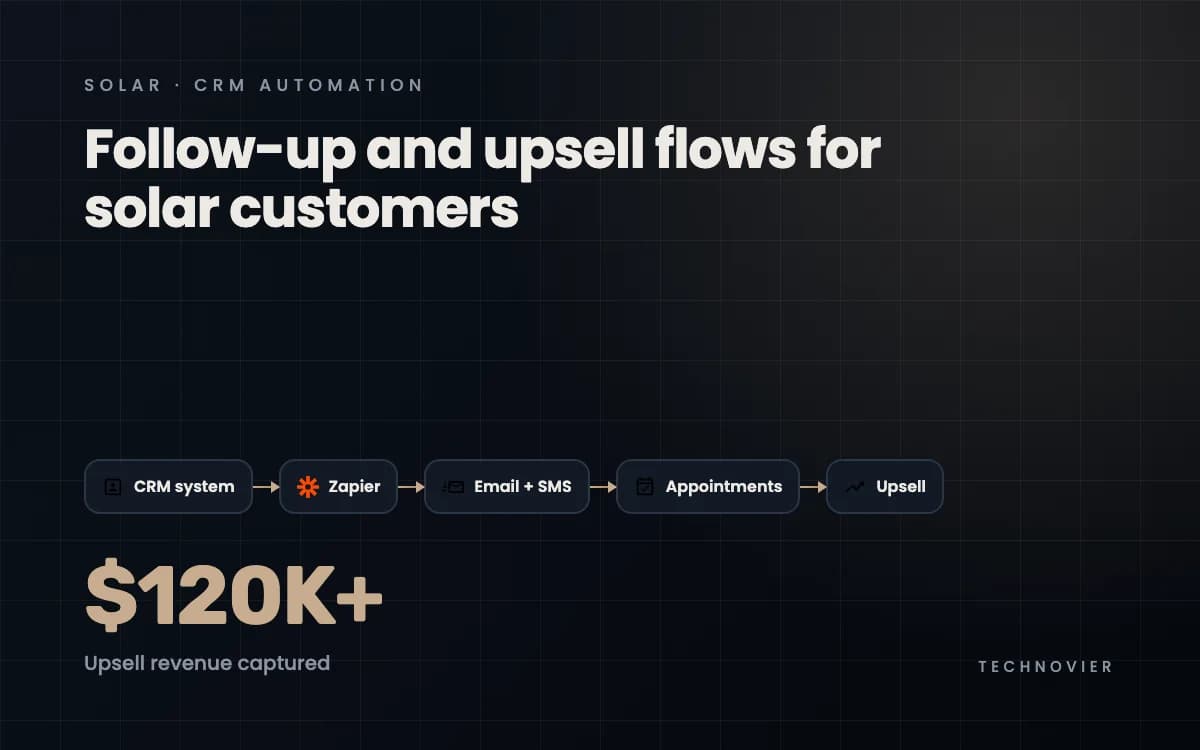 CRM & Automation
32%
Increase in Follow-Up Response Rate
$120K+
Upsell Revenue Captured
41%
Appointment Show-Up Rate Increase
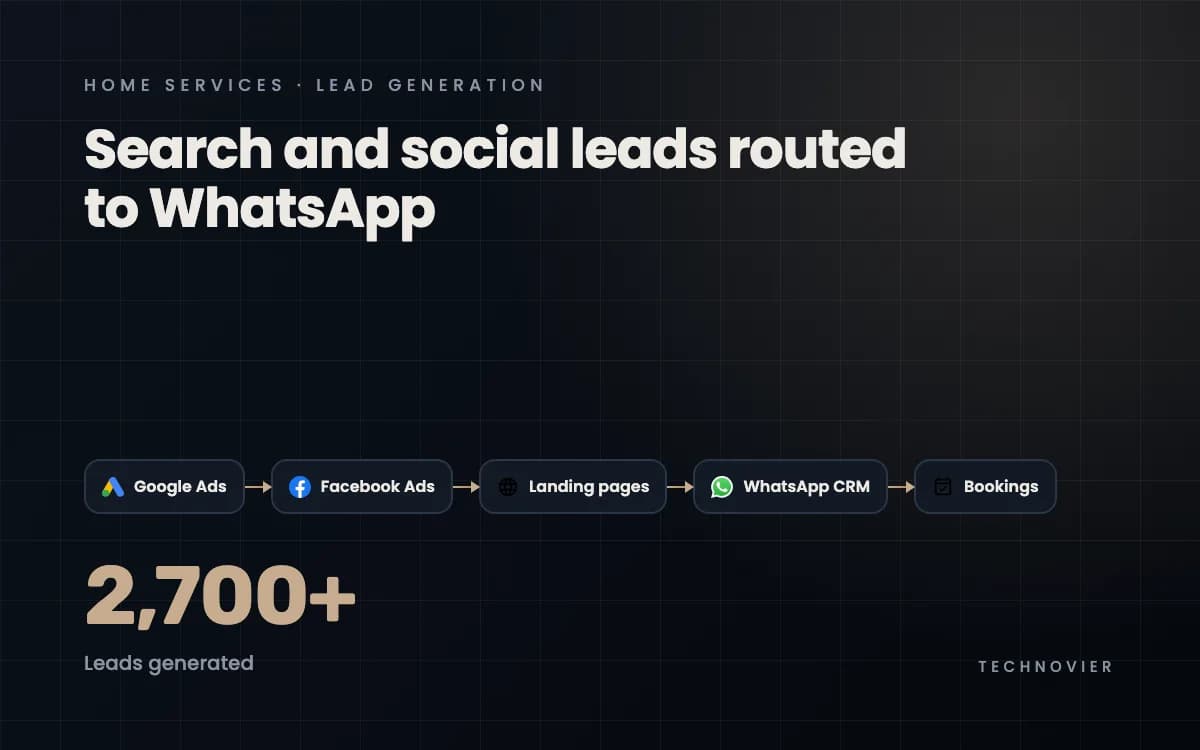 CRM & Automation
$3,530+
Ad Spend (4 months)
6.2M+
Total Impressions
2700+
Leads Generated
FAQ
It is meant to solve one specific leak in the handoff chain, such as response time, booking, qualification, or no-show recovery.
No. It is the faster option when the business only needs one focused improvement and does not need a full architecture rebuild yet.
Yes. CRM routing cleanup and lead-status definitions are part of the work when they affect the selected leak.
We hand over the system, document the change, and recommend the next phase if the team wants to keep optimizing.
Yes. It works best when there is demand already present but one operational leak is blocking the result.
Next step