Solar is one of the most expensive industries to buy a lead in. High ticket, long consideration, and fierce competition push cost per lead into painful territory. Which makes it strange how casually most solar companies lose those leads after paying for them.
The loss almost never happens in the ad account. It happens in the hours and days after the click, in slow callbacks, messy handoffs between setters and closers, and follow-up that stops after one attempt. When each lead costs what a solar lead costs, that leakage is expensive.
The fix is a lead-to-revenue system: one connected path from ad click to installed job that treats every high-cost lead like it matters.
Why Solar Leaks Are So Costly
Two things make solar leakage worse than most industries.
First, the price of the lead. Losing a lead you paid a lot for isn't a rounding error; it's a direct hit to your acquisition math. A leaky funnel doesn't just lose deals, it inflates your effective cost per install.
First contact speed matters more here, not less. Solar shoppers request quotes from several companies at once. Whoever calls back first, with something useful, usually controls the process. Because the first five minutes decide the deal, a callback that comes hours later is often a callback to someone who already booked a survey with a competitor.
Where Solar Leads Leak
The pattern repeats across solar companies:
- Slow speed-to-lead. Web and ad leads wait for a setter to get to them, and the competitor who called in five minutes already won the appointment.
- Setter-to-closer handoff gaps. A lead qualifies with a setter, then context gets lost before the closer or site survey, so the customer repeats themselves and confidence drops.
- No structured follow-up on "not now" leads. Solar decisions take time. A lead who isn't ready this month is often ready in two, but without nurture they're gone.
- Appointment no-shows with no recovery. Booked site surveys fall through with no automated reminders or rebooking.
- No visibility into cost per booked survey or install. Spend is optimized on leads, not on the appointments and installs that actually pay.
Why More Ad Spend Makes It Worse
When leads are this expensive and the post-click system leaks, adding budget just multiplies the loss. You buy more costly leads and lose the same share of them, so your cost per install climbs.
The constraint isn't lead volume. It's the operating system after the click. This is lead leakage after ads applied to a high-ticket, long-cycle sale, where each leak costs more.
The Solar Lead-to-Revenue System
Here's the connected path, built for the way solar actually sells.
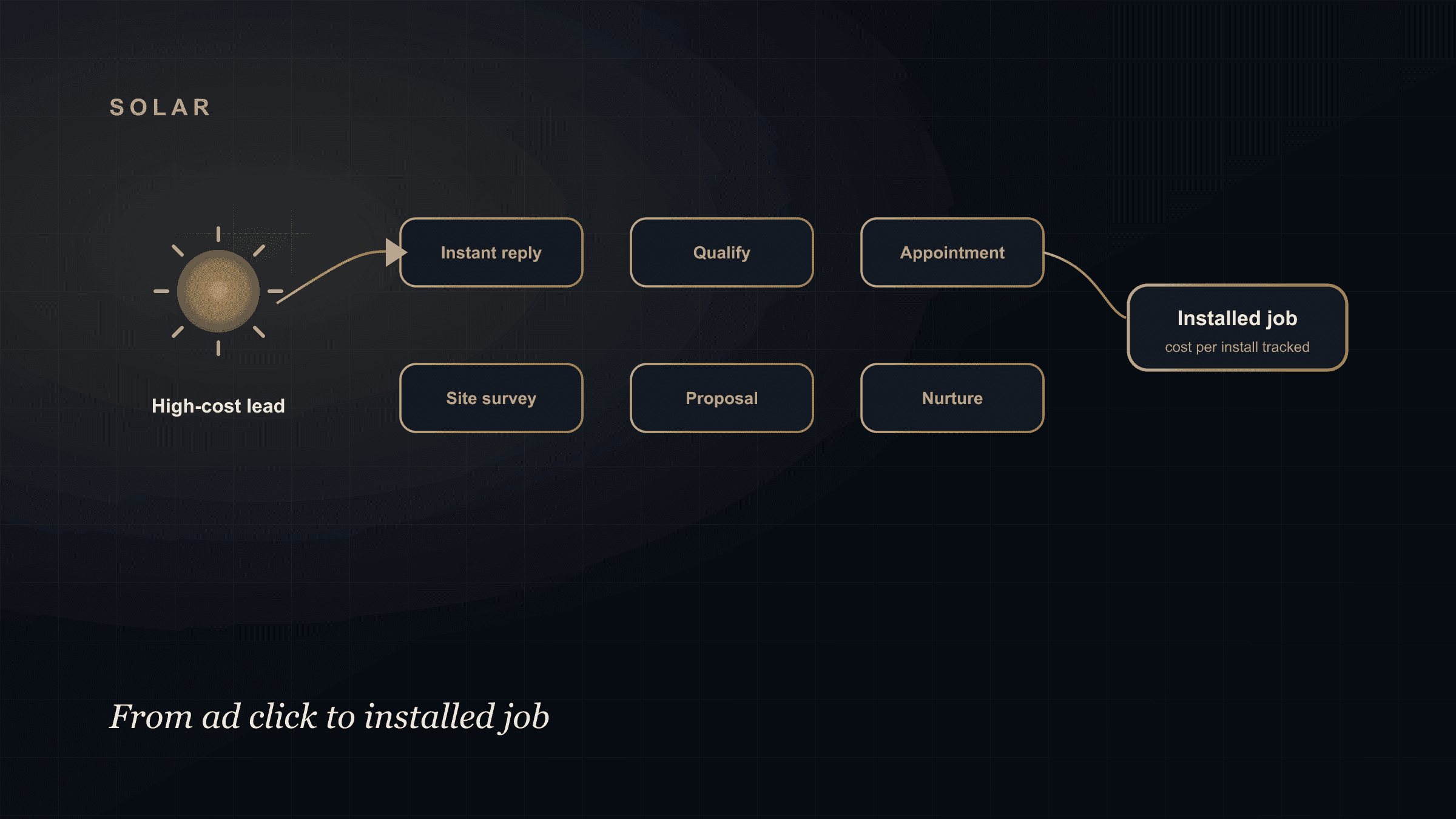
1. Capture every lead into one CRM instantly. Ad forms, landing pages, and calls write into a single system with source, campaign, and the customer's details attached.
2. Respond in minutes, not hours. An automated, personalized SMS or call fires within minutes, so you're first in the customer's inbox and phone, then a setter follows on a warm lead.
3. Qualify before the appointment. Homeownership, roof, bill size, and timeline are captured as structured fields, so only real prospects reach a closer or survey.
4. Book and protect the appointment. A booking link plus automated reminders and rebooking reduce the no-shows that waste closer and survey time.
5. Carry context through the handoff. The setter's notes, qualification answers, and history travel with the lead into the CRM, so the closer and survey team never start cold.
6. Nurture the "not now" leads. Longer-cycle prospects enter a sequence tied to incentives, seasonality, and follow-up, so they come back to you when they're ready.
7. Report on cost per booked survey and install. Spend connects to appointments and installs, so you optimize on jobs, not raw leads.
The Role of AI
AI makes instant, consistent response possible even when your setters are busy or off. It can respond in seconds, qualify with a few questions, book appointments, send reminders, and keep the CRM current, at any hour.
It works inside guardrails and supports your team rather than replacing the human conversation that closes a solar sale. Sensitive actions stay previewed, approved, and logged. The safe build pattern is covered in connecting Make, HubSpot, and Claude.
What Technovier Builds for Solar
Technovier builds the full system for solar companies: landing pages and forms, a CRM pipeline tuned to the solar journey, instant response and setter routing, appointment booking with reminders, nurture for long-cycle leads, and reporting on cost per booked survey and install.
You can see the shape of this work on the solar industry page, and it runs on the same CRM AI automation foundation we build for every service business.
If you're paying premium prices for solar leads and losing them after the click, discuss your solar lead-to-revenue system and we'll map where high-cost leads are leaking.
FAQ
Why do solar companies lose so many leads?
Because solar leads are expensive and the loss happens after the click: slow callbacks, lost context between setters and closers, single-touch follow-up, and appointment no-shows. Since solar shoppers contact several companies at once, whoever responds first with something useful usually wins.
How fast should a solar company respond to a lead?
As fast as possible, ideally within five minutes. Solar shoppers request multiple quotes, so the first company to respond with a useful callback typically controls the process. Automated instant response keeps you first even when setters are busy.
Can AI set solar appointments?
AI can respond instantly, ask qualifying questions, book appointments, and send reminders within guardrails, then hand a warm, qualified prospect to a human setter or closer. It supports the sales conversation rather than replacing it, and sensitive actions stay previewed and approved.
How do you measure cost per install instead of cost per lead?
By connecting ad spend to the CRM's appointment and install stages, so campaigns are attributed to booked surveys and completed installs. That lets you optimize on jobs that actually pay rather than on raw lead volume.