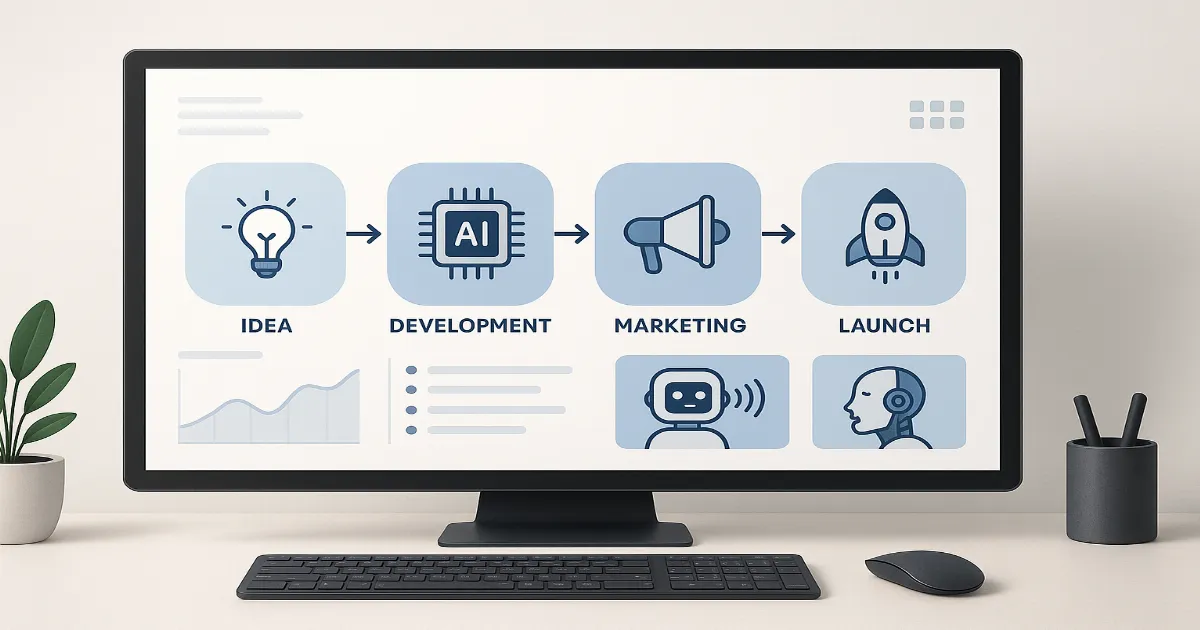
Launching an AI startup is less about having a “smart model” and more about building a reliable, scalable product and business around it. This guide breaks down what technical and non-technical founders need to know about data, infrastructure, regulation, talent, and go-to-market before committing serious time and capital.
Why Most AI Startups Struggle (Even With Great Models)
Many founders enter the AI space with a strong technical background and a compelling model. However, turning that model into a working product that solves a real problem is a completely different challenge. The technical allure of a sophisticated algorithm often masks the complexity of integrating it into a seamless user experience that delivers repeatable value. The model itself is just one piece of a much larger system.
AI models require careful tuning, consistent retraining, and robust pipelines to function reliably. If you overlook the system around the model—data ingestion, preprocessing, monitoring, and serving—you risk delivering inconsistent or irrelevant results. The promise of AI erodes quickly when users encounter errors, slow responses, or confusing outputs.
AI startups also frequently underestimate the effort and cost involved in acquiring, cleaning, and maintaining data. Models are only as good as the data they learn from. Having access to a dataset does not mean it is ready for training. In reality, data rarely arrives in a clean, labeled, and structured form.
Data pipelines break. Formats change. Labels are noisy or missing. Regulations and privacy expectations complicate how you collect and use data. Without a disciplined approach to data management, product development stalls and model accuracy suffers. Building a data infrastructure that can scale and adapt should be a priority from day one—not an afterthought once the product is live.
From Model to Product: Designing a Real AI System
AI development is an iterative process, but the iterations are often slower and more expensive than traditional software cycles. Training large models consumes significant compute resources, and even smaller fine-tuning runs add up quickly. Every change in the model or data requires retraining, revalidation, and redeployment, all of which impact development velocity and burn rate.
Instead of trying to “perfect” a model in isolation, founders should define a narrow, high-value use case and build towards a minimum viable AI product (MVAP) —a product that uses AI to solve one painful problem reasonably well for a clearly defined user segment. Your goal is not academic benchmark performance; it’s reliable, understandable outcomes for your target customers.
Key Components of a Production-Ready AI System
- Data pipelines: Ingestion, cleaning, labeling, and transformation stages that can be monitored, versioned, and audited.
- Model lifecycle management: Training, evaluation, deployment, rollback, and retraining workflows that are automated as much as possible.
- Inference layer: APIs or event-driven systems that expose model outputs with predictable latency and clear error handling.
- Observability: Dashboards for tracking model performance, data drift, latency, and business metrics (conversion, retention, revenue impact).
- UX integration: Interfaces that present AI outputs in a way that fits into user workflows, not just as “magic suggestions” on the side.
Without these elements, even a state-of-the-art model quickly becomes fragile in production. This is where disciplined engineering and operations matter more than one more point of accuracy on a benchmark leaderboard.
Infrastructure, Cost, and Build vs. Buy Decisions
AI workloads place unique pressure on infrastructure. Training and inference require specialized hardware (GPUs, TPUs, or optimized cloud instances), and those costs can spiral if you scale prematurely or design inefficient architectures.
Founders must make early, strategic decisions about where to build and where to leverage existing platforms:
- Foundation models vs. custom models: In many cases, it’s more efficient to start with APIs from providers like OpenAI and later move to fine-tuned or custom models once you’ve validated demand and usage patterns.
- Cloud vs. hybrid vs. on-prem: Regulated industries or sensitive data may require private deployments or virtual private cloud setups. This impacts cost, architecture, and sales cycles.
- Vertical optimization: If you’re serving a specific sector (healthcare, legal, finance), you might eventually need custom infra and governance to meet compliance and latency requirements.
Regardless of your stack, you’ll need disciplined cost monitoring. Inferencing at scale can turn a seemingly healthy SaaS margin into a razor-thin business. Unit economics should be modeled early, preferably with real or realistic usage data.
Data Strategy, Governance, and Trust
Trust is an asset for AI startups. Users are increasingly aware of how their data is collected, stored, and used to train models. Regulators are paying attention too.
Designing a Responsible Data Strategy
- Data sourcing: Be explicit about where your training and fine-tuning data comes from. Avoid unclear licensing or “scraped everything” approaches that may create legal risk later.
- Governance and access control: Implement role-based access, clear audit trails, and data minimization (only storing what you truly need).
- Compliance by design: Build with privacy laws and emerging AI regulations in mind. It’s much more expensive to retrofit compliance after the fact.
- Transparency: Provide customers and users with clear explanations of what data is used, how it’s processed, and how they can opt out or request deletion.
Embedding compliance and ethical review into your product development process is not optional. It’s fundamental to building meaningful, long-term relationships with customers—especially in B2B environments where security and risk teams are part of the buying committee.
Team Composition: Beyond “Just Hire Great ML Engineers”
An AI startup is not just a research lab. You need a balanced team that combines domain knowledge, machine learning expertise, software engineering, and product management. Over-indexing on research talent while under-investing in operators, product thinkers, and GTM talent is a common failure mode.
Roles That Matter Early
- Product-minded founder or PM: Keeps the company focused on specific user problems, not just interesting technical challenges.
- ML / AI engineer: Owns model design, evaluation, and integration, but also understands business constraints like latency and cost.
- Full-stack / platform engineer: Builds the application, APIs, and integrations that make the AI useful and usable.
- Data / MLOps engineer: Designs and maintains data pipelines, CI/CD for models, and monitoring systems.
- GTM / RevOps lead: Connects the product to a real pipeline: ICP definition, pricing, packages, and repeatable sales motions.
Cross-functional collaboration is essential. Engineers and data scientists should work closely with product, design, and customer-facing teams to ensure AI capabilities solve real problems effectively. Where you lack expertise, partnering with specialized firms can accelerate progress.
Choosing the Right Use Case and Business Model
It’s tempting to chase the latest AI trend or build impressive demos. However, sustainable AI startups focus on specific use cases with measurable business value—and where AI is meaningfully better than existing solutions.
How to Evaluate Your AI Startup Idea
- Pain clarity: Is the problem painful enough that customers are actively looking for solutions or spending money on workarounds?
- AI advantage: Does AI give you a defendable edge (speed, accuracy, personalization, automation) or are you just adding “AI” for marketing?
- Data defensibility: Can you accumulate unique data or feedback loops that make your product smarter and harder to copy over time?
- Workflow fit: Does your product plug into existing tools and habits, or does it require users to dramatically change how they work?
- Unit economics: Can you price the product so that margins remain healthy after compute, infrastructure, and support costs?
Start with a clear hypothesis and validate it with users early. Avoid over-engineering features or chasing marginal accuracy gains that don’t move business metrics. Prioritize solutions that are understandable, reliable, and clearly tied to revenue, cost savings, or risk reduction for your customers.
Managing Expectations With Investors and Customers
AI startups often face pressure to deliver breakthroughs quickly. Investors and early adopters may expect step-function improvements versus incremental gains. If you’re not careful, this pressure can push you into overpromising timelines and capabilities.
Founders should set realistic expectations about training cycles, productization effort, and go-to-market ramp time. Overpromising on AI capabilities can backfire when products don’t perform as expected or require longer experimentation to stabilize.
Similarly, customers need transparent communication about what the AI can and cannot do. Avoid overstating capabilities, hiding failure cases, or implying “fully autonomous” systems when humans are still heavily in the loop. Building credibility through honesty leads to stronger long-term relationships and more forgiving early adopters.
Leveraging Technovier’s Ecosystem for Faster AI Startup Execution
You don’t have to build everything from scratch. Instead of spending your first 12–18 months reinventing infrastructure and workflow plumbing, you can stand on top of existing systems and focus on your unique value.
Technovier CRM: Your GTM and RevOps Spine
Technovier CRM gives AI startups a unified place to manage leads, demos, customers, and lifecycle automation. Instead of stringing together multiple tools, you can:
- Track prospects from first touch to closed-won and expansion.
- Trigger onboarding workflows, product tours, and success check-ins.
- Measure how AI features impact conversion, retention, and ticket volume.
Because Technovier CRM is built with automation in mind, it pairs naturally with AI products that need reliable triggers, webhooks, and event-based workflows.
Produxo: Content and Communication Engine for AI Startups
Go-to-market for AI products is content-heavy. You need landing pages, onboarding flows, nurture sequences, and education for non-technical buyers. Produxo and the dedicated workspace at produxo.technovier.com help you build a Gen AI-powered content engine that stays on-message while scaling volume.
- Ship product explainers, changelogs, and nurture campaigns faster.
- Keep messaging consistent across website, email, and sales assets.
- Align content with your ICP, pricing, and onboarding journeys.
Automation Readiness and AI Use Cases
Before layering AI everywhere, it’s crucial to understand where automation will actually move the needle. Technovier’s automation readiness framework helps you evaluate whether your current workflows, data, and team are prepared to successfully adopt AI automation.
From there, you can explore focused deployments such as:
- Generative AI for content and knowledge workflows
- AI conversational chatbots for customer support and qualification
- AI voice bots for follow-ups, renewals, and basic support journeys
Instead of implementing AI in isolation, you treat it as part of a broader automation operating system—tying models, workflows, and CRM data together.
Practical Checklist Before You Launch
Before you fully commit to launching or scaling your AI startup, walk through this pragmatic checklist:
- Problem–solution fit: Can you clearly explain the problem, your AI-powered solution, and why it’s better than current options?
- Data reality check: Do you have sustainable access to the data you need, with clear governance and legal footing?
- Infrastructure plan: Have you modeled training and inference costs against realistic pricing and usage assumptions?
- System design: Do you have at least a basic plan for data pipelines, monitoring, retraining, and rollback?
- Risk & compliance: Have you identified regulatory, security, and ethical risks and baked mitigations into your roadmap?
- Team & partners: Do you have (or plan to access) product, engineering, MLOps, and GTM skills—not just research talent?
- GTM infrastructure: Is your RevOps stack—CRM, automation, content engine—ready to support repeatable sales and onboarding?
Final Thoughts: Build Systems, Not Just Models
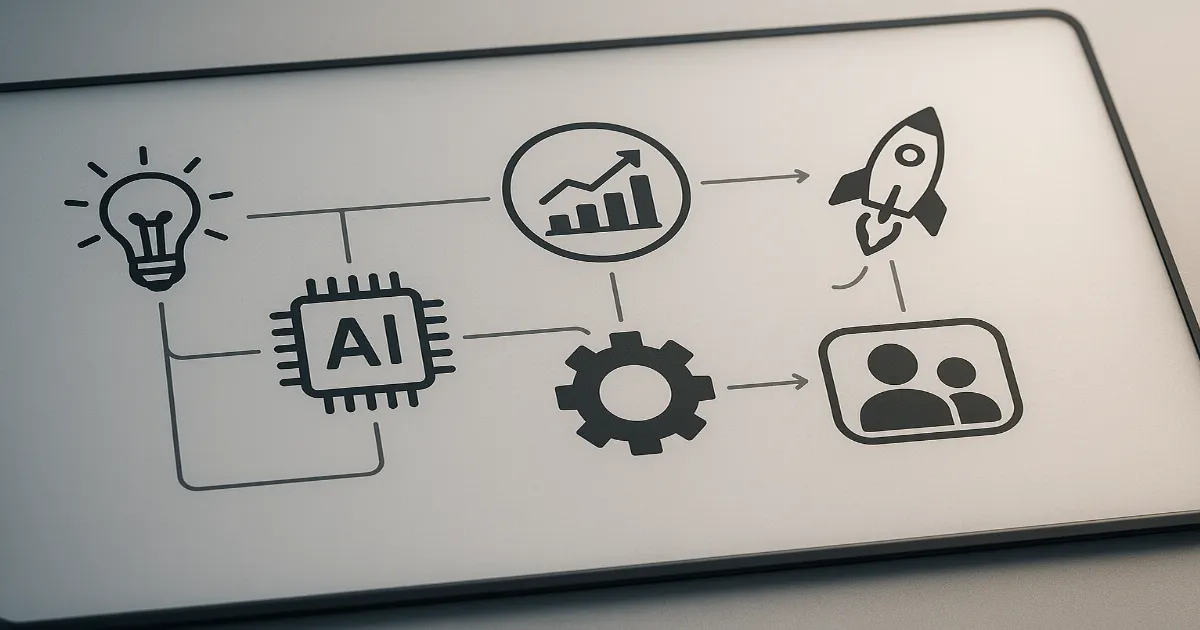
Launching an AI startup today is less about proving that AI “works” and more about demonstrating that you can reliably deliver value with AI inside a real product, to real customers, with real economics. That requires systems thinking across data, infrastructure, compliance, UX, and revenue—not just model performance.
If you approach your startup as a full stack of systems, not a single breakthrough model, you’re far more likely to build something durable—something that grows as models, markets, and customer expectations evolve.
When you’re ready to move from idea to execution, explore how Technovier CRM, Produxo, and Technovier’s automation and AI stacks can help you launch faster, de-risk your infrastructure, and focus on the parts of your AI startup that truly differentiate you.